¶ Introduction

¶ Dynamics 365 F&O (data entities)
A data entity is an abstraction from the physical implementation of database tables. For example, in normalized tables, a lot of the data for each customer might be stored in a customer table, and then the rest might be spread across a small set of related tables. In this case, the data entity for the customer concept appears as one de-normalized view, in which each row contains all the data from the customer table and its related tables.
Synchronous integrations are relatively straightforward. Any data entity that has Is public enabled is automatically available as a service application programming interface (API) in the following URL: https://[BaseURL]/Data/<<Data Entity Public Collection Name>>.
Currently, OData protocol is used to expose endpoints where all public-enabled entities can be interacted with.
¶ Middleware (node.js)
Middleware is software that different applications use to communicate with each other. It provides functionality to connect applications intelligently and efficiently so that you can innovate faster. Middleware acts as a bridge between diverse technologies, tools, and databases so that you can integrate them seamlessly into a single system. The single system then provides a unified service to its users. We use node.js.
Middleware started as a bridge between new applications and legacy systems before it gained popularity in the 1980s. Developers initially used it to integrate new programs with earlier systems without rewriting the earlier code. Middleware has become an important communication and data management tool in distributed systems.
Our middleware is the bridge between Dynamics 365 F&O and our native mobile apps.
¶ Apps (ionic)
Our mobile apps are developed using ionic. The only cross-platform mobile SDK built exclusively for the enterprise. Ionic is a complete open-source SDK for hybrid mobile app development created by Max Lynch, Ben Sperry, and Adam Bradley of Drifty Co. in 2013. The original version was released in 2013 and built on top of AngularJS and Apache Cordova.
¶ Some of our native mobile apps
¶ Some examples
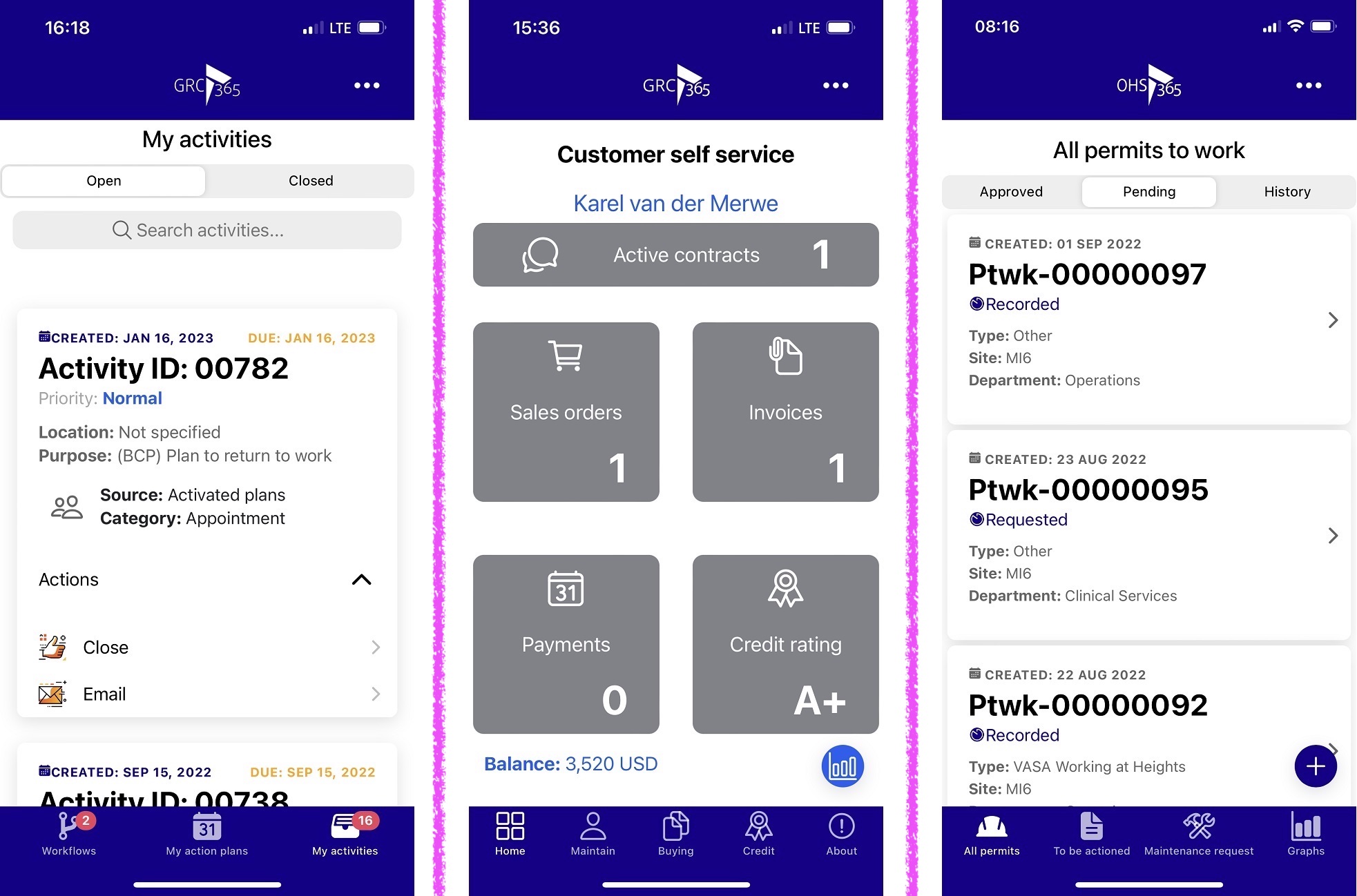
- Action manager app
- Customer self service app
- Permit to work app
¶ A few more examples
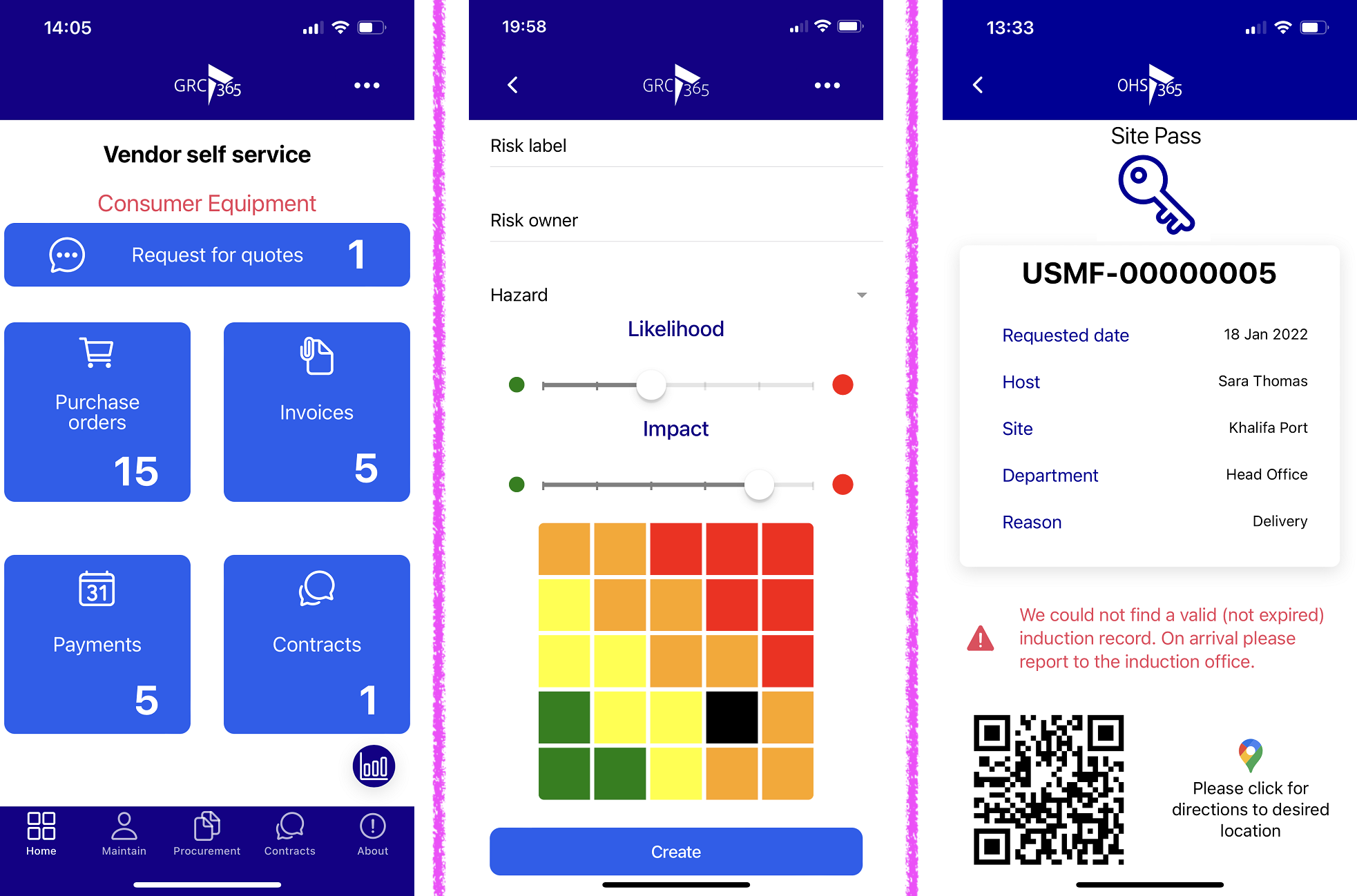
- Vendor self service app
- Risk assessment app
- Site (gate) pass app